AI data reconciliation
We automate reconciliation between systems: comparing records, finding what does not agree, explaining why and correcting what can safely be corrected.
The short answer
AI data reconciliation compares records across two or more systems, such as orders against invoices or the bank against the ledger, matches what agrees and investigates what does not. It handles matches that are not exact, such as different references or split payments. BookMyTechies builds it on your existing systems and data.
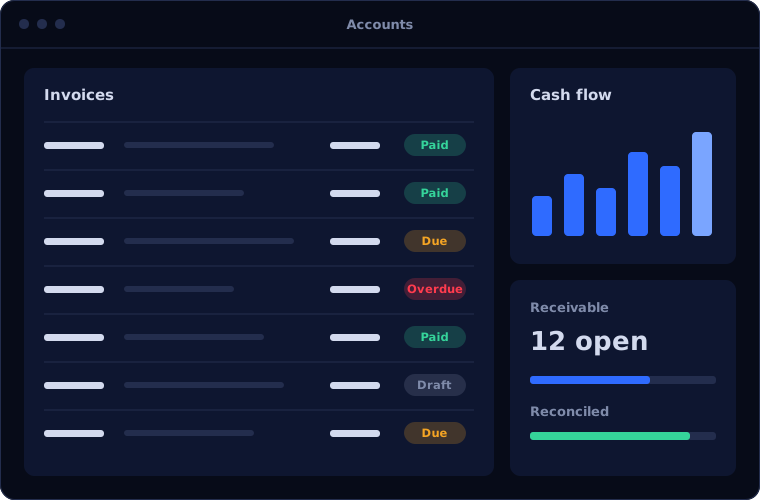
Your systems disagree, and someone has to find out why
Sales says one number, finance another. Stock in the warehouse system differs from the accounts. The payment gateway and the bank do not tie up. Each difference has a cause, and finding it means comparing spreadsheets line by line.
That work is skilled, tedious and usually done under month-end pressure.
How the work is usually done today
- Data is exported from each system
- The exports are lined up in a spreadsheet
- Matches are ticked off by hand or by formula
- Differences are investigated one by one
- Corrections are entered and the process repeats
What AI changes
Matching and first-line investigation are automated, and they run every day instead of once a month.
Matches imperfect data
Records paired even when references, dates or amounts differ slightly.
Explains differences
Each mismatch categorised: timing, fees, duplicates, missing entries or errors.
Proposes corrections
Routine adjustments prepared for approval, with the evidence attached.
Runs continuously
Differences found within a day of occurring, while they are easy to trace.
How the automation works
A reconciliation runs like this.
Collect
Data is pulled from each system on a schedule.
Handled byYour systemsMatch
Records are paired, including near matches.
Handled byAIInvestigate
Unmatched items are analysed and categorised.
Handled byAIReview
Proposed corrections and unexplained items go to a person.
Handled byAI and personCorrect
Approved adjustments are posted and logged.
Handled byYour systems
Where people stay in control
Nothing is changed in your books without the authority to change it.
- Adjustments above a set value need approval
- Unexplained differences always go to a person
- Matching rules are visible and can be adjusted
- Every match and correction can be traced
Security and governance
- The AI works only with the data and systems it has been given access to
- Every automated action is logged with what was done, when and why
- Confidential data is handled under your access rules, and we agree where it is processed before work starts
Systems this connects to
What you can expect
Results depend on your volumes and how clean your data is, so we measure a baseline first and report against it. We do not quote figures before we have seen the process.
- Differences found in days, not at month end
- Staff time spent on causes, not matching
- Reports that agree across departments
- An audit trail for every adjustment
Common questions
What can be reconciled?
Any two sets of records that should agree: bank and ledger, orders and invoices, stock and accounts, payment gateways and sales, or data between two systems.
How does it handle records that do not match exactly?
It weighs several fields together, such as amount, date, party and reference, and matches when the evidence is strong. Weaker matches are shown for confirmation.
Can it fix the underlying cause?
It reports recurring causes, such as a missing integration or a process gap. Fixing those is often the more valuable outcome.
Do we need to change our systems?
No. It works with the systems you have, reading from them and posting approved corrections.
Explore further
Platforms this automation runs on
Often used alongside
Industries where this matters
Do your systems tell different stories? Talk to us.
Tell us which numbers never agree. We will show you how reconciliation can run automatically.